A new construction loan for investors is a short-term loan that funds land and building costs for a home you plan to sell or rent. Leverage is measured as loan to cost (LTC). Lendoor, a nationwide direct lender, offers ground-up loans of up to 92.5% LTC, and non-builders using a general contractor may qualify for up to 95% LTC.
What is a new construction loan for investors?
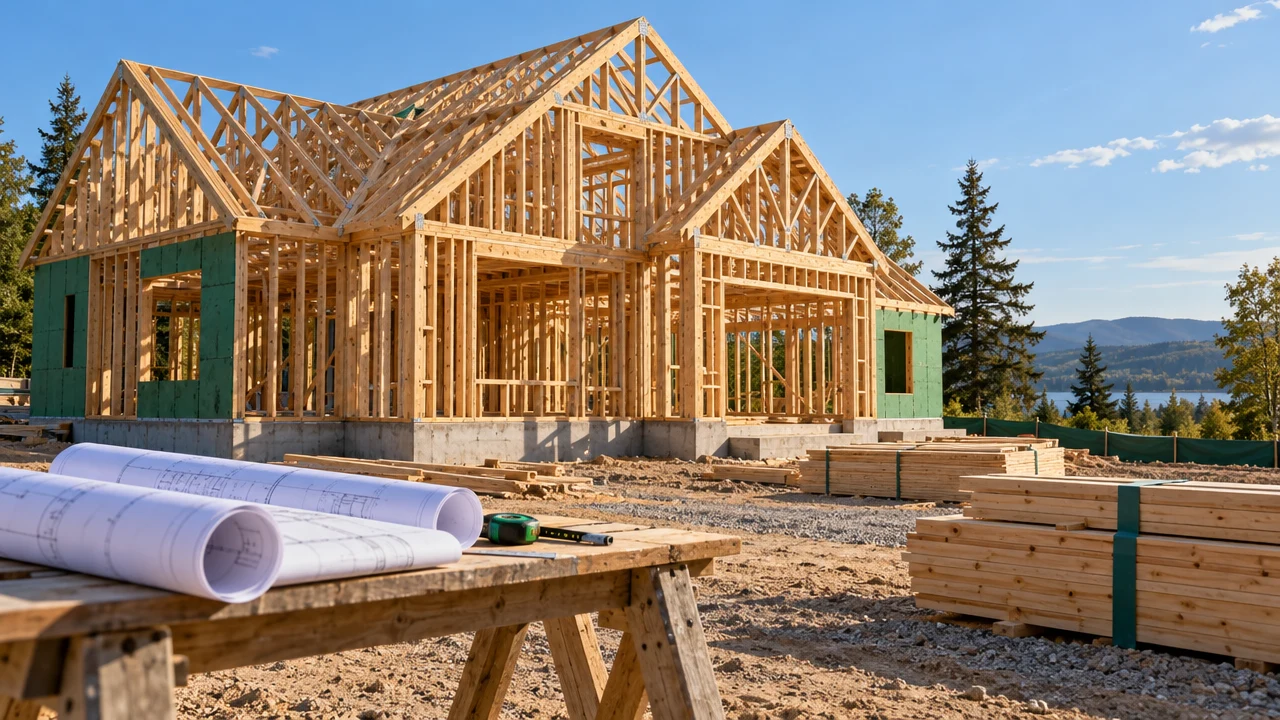
A new construction loan, also called a ground up construction loan or ground-up loan, is a business-purpose loan for building a new home from the ground up. Investors use it to build spec homes to sell, or new rentals to hold. It is different from a loan on a home you plan to live in.
The loan is secured by the land and the home being built. Because the finished home doesn't exist yet, the lender sizes the loan on what the project costs and caps it against what the finished home should be worth. The construction money is not paid all at once. It is released in draws as the build moves forward.
How is a construction loan sized? What is LTC?
Construction lenders usually measure leverage as loan to cost:
LTC = Loan amount ÷ Total project cost
Total project cost typically includes the land plus the construction budget, and may include some soft costs such as plans and permits. Lenders also usually apply a cap based on the completed value, sometimes called ARV. The loan is the lower of the two limits. For the full comparison of these measures, read our guide to loan to value vs loan to cost.
Lendoor's LTC counts land, hard costs, soft costs and interest reserves, and the completed value cap is up to 75% LTARV.
How do Lendoor's ground-up options compare?
|
Experienced builder |
Non-builder using a GC (zero experience) |
| Maximum leverage |
Up to 92.5% LTC |
May qualify for up to 95% LTC |
| Whose experience counts |
Yours |
Your general contractor's |
| Does the GC sign the loan? |
Not applicable |
No, the GC does not need to sign the loan |
| Experience required |
3+ completed builds (borrower or GC) |
None for you; the GC must show 3+ completed builds in the area within the last 3 years, with certificates of occupancy and permits listing them as the contractor |
| Credit requirement |
Varies by deal |
Varies by deal |
| Loan size |
$250K to $5M |
$250K to $5M |
| Rate and term |
Varies by deal |
Varies by deal |
See current details for Lendoor's ground-up construction program. All loans are subject to underwriting.
Can I get a construction loan with no building experience?
You may qualify. Many construction lenders want to see completed builds before they lend. Lendoor's zero-experience program takes a different approach: if you have not built before, you may qualify for up to 95% LTC by hiring a general contractor who has the construction experience.
The GC does not need to sign the loan or take on the debt. You remain the borrower. The GC's experience supports the build plan, the budget, and the timeline. That lets a first-time builder, such as a flipper moving into new construction or an investor who owns a lot, start a project without first building a track record.
If you are newer to investing overall, our guide to fix and flip loans for beginners covers how short-term investor loans work.
What do lenders look at on a new construction deal?
Expect a construction lender to review:
- The land. Whether you own it or are buying it, its value, and whether it is ready to build on (zoning, utilities, access).
- Plans and permits. Approved or in-process plans and a permit path.
- The budget. A line-item construction budget, ideally from your GC's bid.
- The contractor. Your GC's experience, license where required, and insurance.
- Completed value. An appraisal based on plans and comparable new homes.
- Your credit, cash, and reserves. You bring the share of costs the loan doesn't cover, plus a cushion for overruns. Reserves are set case by case and may include unfunded rehab, interest reserves if not rolled in, and enough to reach the next draw.
- Your exit. Sell the finished home, or refinance into a long-term rental loan.
How do construction draws work?
Construction funds are held back and released in stages. In general:
- Your GC completes a stage of work, such as foundation, framing, or dry-in.
- You request a draw for the completed work.
- The lender inspects the work, often through a third-party inspector.
- The lender releases funds for that stage.
Draws reimburse completed work, so plan cash flow with your GC before the build starts. Lendoor's draws are reimbursement-based on completed work.
What does a ground-up deal look like? (hypothetical example)
The numbers below are round and made up to show the math. Only the 92.5% and 95% LTC maximums reflect Lendoor's programs. Everything else is illustrative, not Lendoor terms or a quote. The loan is still subject to underwriting and the completed value cap, which isn't modeled here.
| Item |
Amount |
| Land cost |
$100,000 |
| Construction budget (GC bid) |
$300,000 |
| Soft costs (plans, permits) |
$20,000 |
| Total project cost |
$420,000 |
| Loan at up to 95% LTC |
Up to $399,000 |
| Your cash at up to 95% LTC |
$21,000 or more |
| Loan at up to 92.5% LTC (experienced tier) |
Up to $388,500 |
| Your cash at up to 92.5% LTC |
$31,500 or more |
Interest, closing costs, and reserves are extra and not shown. If the completed value comes in low, the value cap could reduce the loan, which is why a realistic appraisal and budget matter.
What happens when the build is finished?
You have two main exits:
- Sell. You list the finished home and repay the loan from the sale.
- Hold as a rental. You refinance into a long-term DSCR loan, which qualifies on the property's rent instead of your personal income. Lendoor offers DSCR loans for that exit. See our guide to DSCR loans in Texas for how rental loans are sized.
Building in Texas? Read our overview of hard money lenders in Texas for flips and ground-up projects there.
Where does Lendoor lend, and how do I apply?
Lendoor lends in 45 states. The excluded states are Nevada, Utah, North Dakota, South Dakota, and Alaska. As a direct lender, Lendoor underwrites and funds its loans. Read more about Lendoor's team.
To apply:
- Gather your land details, plans, GC bid, and budget.
- Submit your construction deal.
- We review the deal and send terms. Timing depends on the deal and how fast documents come in.
- Appraisal and underwriting confirm the completed value and budget.
- Close, and construction funds are released in draws.
Frequently asked questions
What is a new construction loan for investors?
It is a short-term, business-purpose loan that funds land and building costs for a new home an investor plans to sell or rent. It is usually sized on loan to cost and released in draws.
What LTC does Lendoor offer on ground-up construction?
Lendoor offers up to 92.5% LTC on ground-up construction. Non-builders using a general contractor may qualify for up to 95% LTC. All loans are subject to underwriting.
Can I get a construction loan with no experience?
You may qualify. With Lendoor's zero-experience program, a borrower who has never built may qualify for up to 95% LTC by using an experienced general contractor.
Does my general contractor have to sign the loan?
No. In Lendoor's zero-experience program, the GC does not need to sign the loan. You remain the borrower, and the GC's experience supports the project.
How do construction draws work?
The lender holds the construction budget and releases it in stages after each stage of work is completed and inspected. Draws reimburse completed work.
What is the difference between LTC and LTV on a construction loan?
LTC compares the loan to the total project cost. LTV compares it to the property's value. Construction loans are usually sized on LTC, with a cap based on completed value.
Can I keep a new build as a rental?
Yes. Many investors refinance a finished build into a long-term DSCR loan, which qualifies on rental income instead of personal income.
Ready to build?
Send us the land, plans, and your GC's budget. Submit your deal and we'll review it and send terms.
About the author
Dana Lefkowitz is a Co-Founder of Lendoor. NMLS #1997062.
Lendoor, LLC, NMLS #2856707. This article is general information, not a loan offer or commitment. All loans are subject to underwriting and approval. Terms vary by property and borrower.