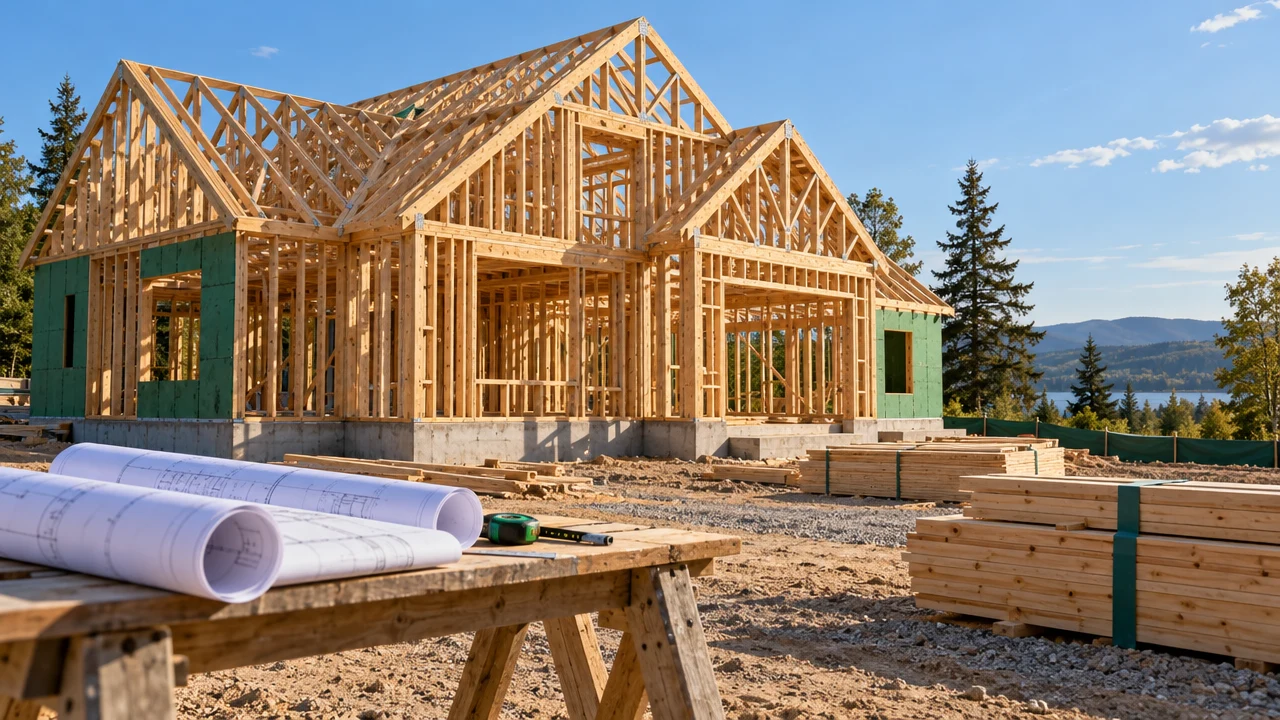
A fix and flip loan for beginners is a short-term loan that covers most of the purchase price and rehab budget on a house you plan to renovate and sell. Prior flips aren't always required. Lendoor, a nationwide direct lender, offers a zero-experience program covering up to 90% of purchase and up to 100% of rehab.
How do fix and flip loans work for beginners?
A fix and flip loan is a short-term, business-purpose loan secured by the property you're renovating. It is built for a simple plan: buy a house that needs work, renovate it, and sell it or refinance it.
Here is how the money usually moves:
- At closing, the loan covers part of the purchase price. You bring the rest, plus closing costs.
- During the rehab, the lender holds the renovation funds and releases them in draws as work gets done.
- At the end, you sell the house and pay off the loan from the sale proceeds. If you decide to keep it as a rental, you refinance into a long-term loan instead.
Flip loans are sized on cost, meaning a percentage of the purchase price and a percentage of the rehab budget. Most lenders also cap the loan at a percentage of the after repair value (ARV), which is what the house should be worth when finished. For the full math, see our guide to loan to value vs loan to cost.
Beginners usually get slightly less leverage than experienced flippers, because the lender is taking a chance on someone without a track record.
Can I get a fix and flip loan with no experience?
Yes. Lendoor's zero-experience fix and flip program covers up to 90% of the purchase price and up to 100% of the rehab budget. On purchase, that is 90% LTV. You bring the other 10% of the purchase price plus closing costs, and the full renovation budget is funded through draws.
Once you have completed flips, you may qualify for the experienced tier, which covers up to 100% of purchase and up to 100% of rehab, with $0 down.
How do Lendoor's zero-experience and experienced tiers compare?
|
Zero-experience tier |
Experienced tier |
| Purchase funded |
Up to 90% (90% LTV on purchase) |
Up to 100% |
| Rehab funded |
Up to 100% |
Up to 100% |
| Down payment on purchase |
10% of purchase price |
$0 down |
| Experience required |
None |
10+ completed flips for max leverage |
| Credit requirement |
740 minimum FICO for up to 90% of purchase and up to 100% of rehab; 680 may qualify at around 80% |
720 minimum FICO for up to 100% of purchase and up to 100% of rehab |
| ARV cap |
Up to 75% LTARV |
Up to 75% LTARV |
| Loan size |
$150K to $5M |
$150K to $5M |
| Rate and term |
Varies by deal |
Varies by deal |
Either tier still needs underwriting, an appraisal, and a realistic budget. Closing costs are separate from the down payment. Current details are on our fix and flip loan program page.
What do lenders look at for a first-time flipper?
Without a track record, the deal itself carries more weight. Expect a lender to review:
- The purchase price and ARV. The spread between what you pay, what you spend, and what the house will sell for is the heart of the deal. The appraisal sets the ARV.
- The rehab budget. A line-item scope of work shows you know what the house needs. Lenders check whether the budget fits the ARV.
- Your contractor. Who is doing the work, and have they done similar jobs?
- Your credit. Lenders set minimums by program. At Lendoor, zero-experience borrowers need a 740 minimum FICO for up to 90% of purchase and up to 100% of rehab; 680 may qualify at around 80%. Experienced borrowers need a 720 minimum FICO for up to 100% of purchase and up to 100% of rehab.
- Cash to close and reserves. You need your share of the purchase, closing costs, and a cushion for surprises. Reserves are set case by case and may include unfunded rehab, interest reserves if not rolled in, and enough to reach the next draw.
- Your entity. Lendoor lends only to LLCs and requires a personal guarantor.
- Your exit plan. Sell, or refinance into a rental loan. If you might hold the property, read our guide to DSCR loans in Texas to see how rental loans are sized.
What should a beginner have ready before applying?
Use this checklist before you submit a deal:
- Property address and signed or pending purchase contract
- Purchase price and estimated closing costs
- Line-item rehab budget and scope of work
- Your estimated ARV, with recent comparable sales
- Contractor name, license if required, and a written bid
- Proof of funds for your share of purchase, closing costs, and reserves
- LLC documents, if buying in an entity
- Timeline for the renovation and the sale
- Exit plan: sale price target, or rental refinance plan
How do rehab draws work?
Lenders rarely hand over the whole renovation budget at closing. Instead, the rehab money sits in a holdback and is paid out in stages, called draws.
In general, it works like this:
- You finish a stage of work, such as demo, framing, or rough plumbing, using your own funds or your contractor's credit.
- You request a draw for that completed work.
- The lender inspects the property, often with a third-party inspector or photos, to confirm the work is done.
- The lender releases the funds for that stage.
Because draws reimburse completed work, you need enough cash to get the first stage done before money comes back. Plan for that when you set up your contractor's payment schedule. Lendoor's draws are reimbursement-based on completed work.
What mistakes do beginner flippers make?
Most first-flip problems come from the numbers, not the loan. Common ones include:
- Overestimating ARV. Using the best sale on the street instead of truly comparable homes.
- Underbudgeting the rehab. Skipping a contingency for hidden problems behind the walls.
- Forgetting carrying costs. Interest, taxes, insurance, and utilities add up every month the project runs long.
- Ignoring selling costs. Agent commissions and closing costs come out of your profit.
- Running out of cash between draws. Draws reimburse completed work, so you need working cash.
We cover these in more detail in fix and flip financing mistakes.
What does a beginner flip look like? (hypothetical example)
The numbers below are round and made up to show the math. Only the 90% of purchase and up to 100% of rehab structure reflects the zero-experience program. Closing costs, interest, and sale costs are illustrative, not Lendoor terms or a quote.
| Item |
Amount |
| Purchase price |
$200,000 |
| Rehab budget |
$50,000 |
| Loan: 90% of purchase |
$180,000 |
| Loan: 100% of rehab (paid in draws) |
$50,000 |
| Total loan |
$230,000 |
| Your down payment (10% of purchase) |
$20,000 |
| Closing costs at purchase (illustrative) |
$6,000 |
| Carrying costs and interest over the project (illustrative) |
$15,000 |
| After repair value / sale price |
$330,000 |
| Selling costs (illustrative, ~7%) |
$23,100 |
Profit math: $330,000 sale − $230,000 loan payoff − $23,100 selling costs = $76,900 back to you. Subtract the $20,000 down payment, $6,000 closing costs, and $15,000 carrying costs, and the illustrative profit is $35,900.
In this example, the loan is about 70% of ARV ($230,000 ÷ $330,000), and you put in about $41,000 of your own cash over the project. Change the ARV to $300,000 and the profit drops to about $8,000, which is why a conservative ARV matters. The final loan is still subject to the ARV cap of up to 75% LTARV.
How do I apply for a beginner fix and flip loan with Lendoor?
- Gather your checklist items above.
- Submit your deal through our deal submission form with the purchase price, rehab budget, and ARV.
- Review terms. We review the deal and send terms. Timing depends on the deal and how fast documents come in.
- Appraisal and underwriting. The appraisal confirms the ARV, and we review credit, cash, and the budget.
- Close and start work. Rehab funds are released in draws as work is completed.
Lendoor lends in 45 states, including Texas (see our guide to hard money lenders in Texas). The excluded states are Nevada, Utah, North Dakota, South Dakota, and Alaska. As a direct lender, Lendoor underwrites and funds its loans. Read more about Lendoor.
Frequently asked questions
Can I get a fix and flip loan with no experience?
Yes. Some lenders offer programs for first-time flippers. Lendoor's zero-experience fix and flip program covers up to 90% of the purchase price and up to 100% of the rehab budget, subject to underwriting.
How much down payment do I need for my first flip?
With Lendoor's zero-experience program, you bring 10% of the purchase price plus closing costs, because the loan covers up to 90% of purchase and up to 100% of rehab. Experienced flippers can qualify for up to 100% of purchase with $0 down.
Does a fix and flip loan cover renovation costs?
Yes. Most fix and flip loans include a rehab budget. Lendoor covers up to 100% of rehab on both tiers, released in draws as the work is completed and inspected.
What is a rehab draw?
A rehab draw is a payment from the lender's renovation holdback, released after a stage of work is completed and inspected. Draws reimburse completed work, so you need cash to start each stage.
What do lenders look at for beginner flippers?
Lenders focus on the deal: purchase price, rehab budget, after repair value, the contractor, your credit, your cash to close and reserves, and your exit plan.
What is the difference between the zero-experience and experienced tiers?
At Lendoor, the zero-experience tier covers up to 90% of purchase and up to 100% of rehab. The experienced tier covers up to 100% of purchase and up to 100% of rehab with $0 down.
Can I keep the house as a rental instead of selling it?
Yes. Many investors refinance a finished flip into a long-term rental loan, such as a DSCR loan, which qualifies on the property's rent instead of personal income.
Ready to fund your first flip?
Send us the property, the purchase price, your rehab budget, and your ARV. Submit your deal and we'll review it and send terms. See all programs on our Lendoor loan programs page.
About the author
Dana Lefkowitz is a Co-Founder of Lendoor. NMLS #1997062.
Lendoor, LLC, NMLS #2856707. This article is general information, not a loan offer or commitment. All loans are subject to underwriting and approval. Terms vary by property and borrower.